What Size Dog Bed? A Length Chart for UK Dogs
| Dog, nose to tail base | Bed length to look for | Our Classic bed size | Dogs often in this range |
|---|---|---|---|
| Up to 45cm | 60cm or more | Small (60x45cm) | Very small breeds, such as Chihuahuas and Yorkshire Terriers |
| 46 to 60cm | 75cm or more | Medium (75x55cm) | Small to medium breeds, such as Cavalier King Charles Spaniels and Beagles |
| 61 to 75cm | 90cm or more | Large (90x65cm) | Medium to large breeds, such as Border Collies and Springer Spaniels |
| 76 to 90cm | 105cm or more | XL (105x75cm) | Large breeds, such as Labradors and Golden Retrievers |
| Over 90cm | Longer than 105cm | Too small: look for a larger bed elsewhere | Giant breeds, such as Great Danes and Mastiffs |
How do I measure my dog for a bed?
Measure your dog stretched out on their side, from the tip of the nose to the base of the tail. Leave the tail out. Use a soft tape, or a piece of string laid against a ruler, and ask someone to hold a treat so your dog stays still.
Then measure the widest point of the body, usually across the shoulders or hips, and write both numbers down. Our guide how to measure your dog for the right product size covers the same steps for ramps, harnesses and feeding stands too.
Measure again if your dog's weight or shape has changed, and measure the space where the bed will sit, since a bed that does not fit the spot will end up moved somewhere less suitable.
How much bigger than my dog should the bed be?
A common rule of thumb is to add about 15cm to the stretched-out length, so there is room to stretch and shift position. UK bed sellers quote anything from roughly 15cm to 30cm, and there is no official standard, so treat 15cm as a sensible minimum rather than an exact rule.
A dog who stretches right out, or a heavy dog who is more comfortable with all four legs on the bed, will do better with the upper end. A small dog who curls up tightly can often manage with less.
What bed size does my breed need?
The table above turns your measurement into a bed length. The breed examples are only a rough guide, because dogs of the same breed vary a lot in length and build, and long-bodied breeds will not match short-bodied dogs of the same weight. Always go by your own dog's measurement, not their breed or their weight.
A dog's weight matters too for how much support the bed needs, but weight does not tell you how much floor space a dog takes up when lying down.
Does sleeping position change the size I need?
Yes. A dog who sleeps curled into a ball needs a smaller footprint than one lying flat on their side with legs out, and a sprawler needs the most. Watch how your dog sleeps for a few nights and measure for the position they use most. Our guide curled up or sprawled out: choosing a dog bed goes through the common positions.
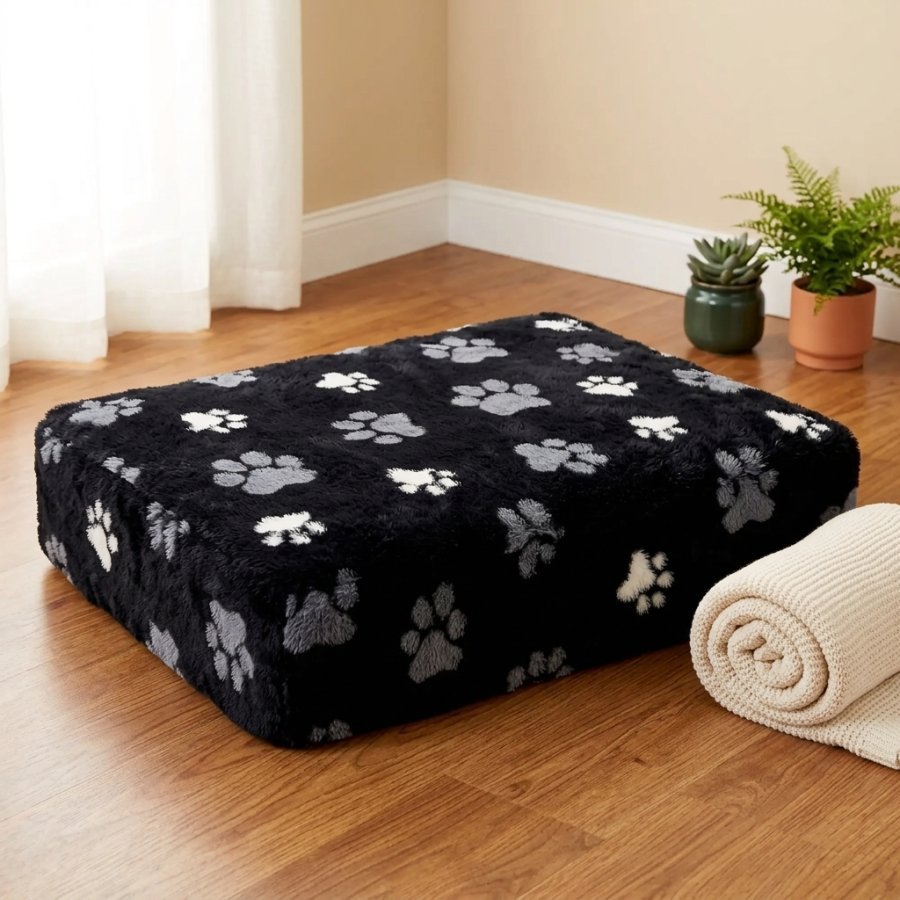 Classic Orthopaedic Memory-Foam Bed
A 9cm memory-foam base to keep hips and elbows off the floor. View
What if my dog is between sizes?
Choose the larger size. A bed that is slightly too big is rarely a problem, while one that is too small leaves legs and hips hanging over the edge, which defeats the point of a supportive bed. The exception is a small space: check where the bed will go and measure that spot before you order.
What sizes does our Classic Orthopaedic Memory-Foam Bed come in?
Our Classic Orthopaedic Memory-Foam Bed is a rectangular bed with a 9cm memory-foam base (not a topper) and a removable, machine-washable plush cover. It comes in four sizes: Small (60x45cm), Medium (75x55cm), Large (90x65cm) and XL (105x75cm).
Compare the longer figure with your own measurement plus the extra room described above. For more on foam thickness and what makes a bed supportive, see memory foam density explained.
When is this bed not the right size or shape?
- Your dog measures more than about 90cm from nose to tail base: even the XL will be tight for a sprawler, so look for a larger bed elsewhere
- Your dog curls into a tight ball and likes high sides: a raised-rim bed may suit better. Our Round Comfort Bed is one option, though it is a soft bed and not an orthopaedic one
- Your dog leaks urine: our page does not describe the Classic bed as waterproof, so read waterproof vs standard dog beds and consider a washable pad
- Your dog has a mobility condition: dog bed for arthritis lists what to look for, and your vet can advise on what suits your dog
Before you buy
Measure your dog twice, compare the result with the listed dimensions rather than the S, M or L label, and check the space where the bed will go. We dispatch from a UK warehouse and offer 30-day refunds: see our returns policy for the details. If your measurement falls on a boundary in the table, email us before ordering and we will help you decide.
Shop the Classic Orthopaedic Memory-Foam Bed
A 9cm memory-foam base to keep hips and elbows off the floor.
View the product — £59.99Last reviewed on 9 November 2026. General information, not veterinary advice.
Related guides
How to Measure Your Dog for the Right Product Size
How to measure your dog for a bed, ramp or feeding stand, with step-by-step instructions and what to do between sizes.
Curled Up or Sprawled Out? Choosing a Dog Bed
How to choose a dog bed for a dog that sleeps curled up or sprawled out: round or flat, what size, and when a raised-rim bed is not the right fit.
Memory Foam Density: What Makes a Bed Truly Orthopaedic
What makes a dog bed truly orthopaedic? Foam types, density, thickness, simple at-home tests and the honest downsides of memory foam.
Best Dog Bed for Arthritis in the UK: Buying Guide
How to choose a dog bed for arthritis in the UK: foam depth, size, bolster or flat, cleaning, common mistakes and when a bed is not the answer.