How to Wash a Memory Foam Dog Bed and Its Cover
| Part | How to clean it | Avoid |
|---|---|---|
| Cover | Machine wash as the care label says, with a mild detergent | Hotter washes or tumble drying if the label says no |
| Foam | Vacuum, then spot clean with a damp cloth and air dry fully | Soaking, wringing, tumble dryers and direct heat |
| Smells and accidents | Blot, then use a pet-safe enzyme cleaner or bicarbonate of soda, then air | Ammonia-based cleaners, whose smell can resemble urine |
| Spare cover or pad | Wash it on its own label and swap it in while the bed dries | Putting a damp cover back on foam |
Can you machine wash a memory foam dog bed?
Usually only the cover. Memory foam soaks up water, takes a long time to dry and can stay damp inside, which leads to smells and mould, so the foam itself is generally spot cleaned rather than put in a washing machine. Beds differ, so always follow the label on yours.
For our Classic Orthopaedic Memory-Foam Bed, the page says the cover is removable and machine washable and to check the care label for the temperature. It does not give care instructions for the foam, so treat the foam as spot clean only unless the label says otherwise.
How do I wash the cover?
- Vacuum the bed first to lift hair and dirt
- Unfasten and remove the cover, and check the care label for the temperature. Close any zip or fastening before washing so it does not snag
- Wash on that setting with a mild detergent; a fragrance-free one is a common choice if your dog has sensitive skin
- Dry the cover as the label says, and make sure it is completely dry before it goes back on
Washing the cover on its own also means you can do it more often without disturbing the foam.
How do I clean the foam itself?
Vacuum it, then wipe the surface with a cloth wrung out well in warm water with a few drops of mild detergent. Blot with a dry towel rather than rubbing, and leave it to air dry flat in a warm, ventilated room, away from radiators and direct sun. Turn it over once the top is dry so both sides dry fully. Work in sections, and if a mark is stubborn, repeat with a fresh cloth rather than adding more water. Damp foam can take a day or more to dry, so a spare cover or a second bed helps while you wait.
Do not soak the foam, wring it, or put it in a tumble dryer, because heat and pressure can damage it.
How do I get rid of smells and accidents?
Act quickly. Blot up as much liquid as you can with kitchen paper or a towel, then use a pet-safe enzyme cleaner as directed on its label. For lingering smells on the foam, a light dusting of bicarbonate of soda left for a few hours and then vacuumed up is a common remedy. Avoid ammonia-based products, because the smell can resemble urine.
If accidents are becoming regular, read managing dog incontinence and talk to your vet first, because leaking can have causes that need checking.
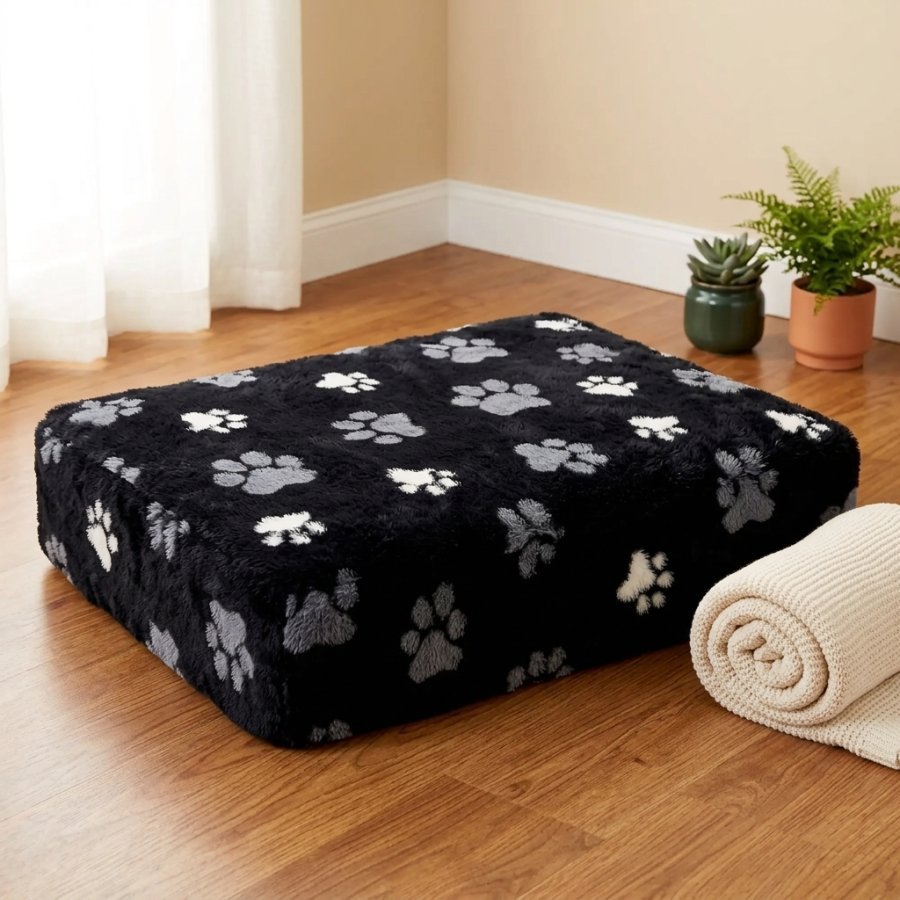 Classic Orthopaedic Memory-Foam Bed
A 9cm memory-foam base to keep hips and elbows off the floor. View
How often should I wash it?
There is no fixed rule. Many owners wash the cover every week or two, and straight away after any accident or muddy day. Vacuuming the bed between washes helps, and a rubber glove or lint roller will lift hair that the vacuum misses. If your dog has a skin condition or allergies, ask your vet how often they would suggest.
How can I keep the foam cleaner for longer?
A removable cover helps, but the foam is the part you cannot wash easily, so protect it. A washable pad on top of the bed catches accidents before they reach the foam and can be washed separately. See washable or disposable dog pads for a comparison, and waterproof vs standard dog beds if you are unsure whether you need a waterproof bed.
When has a bed had its day?
A foam bed that stays dented, no longer springs back, or smells even after cleaning has probably done its job. A thinner, flatter bed offers less support, which matters most to heavier dogs. If your dog seems to be finding it harder to settle or get up, ask your vet, because the bed may not be the whole story.
Before you buy
A removable cover makes day-to-day care much easier, but memory foam is generally not suited to machine washing, so expect to spot clean it and to wait for it to dry. If you want a bed you can wash whole, or your dog often has accidents, a bed made for that may suit you better: see waterproof vs standard dog beds. Our returns policy is at returns.
Shop the Classic Orthopaedic Memory-Foam Bed
A 9cm memory-foam base to keep hips and elbows off the floor.
View the product — £59.99Last reviewed on 9 November 2026. General information, not veterinary advice.
Related guides
Memory Foam Density: What Makes a Bed Truly Orthopaedic
What makes a dog bed truly orthopaedic? Foam types, density, thickness, simple at-home tests and the honest downsides of memory foam.
Waterproof vs Standard Dog Beds: Which Do You Need?
Do you need a waterproof dog bed? How wipeable, waterproof and fully lined beds differ, when a standard bed is fine, and how to test a claim.
Managing Dog Incontinence: A Practical, No-Judgment Guide
Dog incontinence explained without judgement: why to see your vet first, what to tell them, and practical ways to protect beds, floors and your dog's comfort.
Washable or Disposable Dog Pads? Comparing the Two
Washable or disposable pads for an older dog? How the two compare on cost, waste, absorbency and day-to-day use.