Why Some Dogs Settle Faster in a "Calming" Bed
Do calming dog beds actually work?
Some dogs clearly settle more easily in a soft, raised-rim bed they can curl into, but a "calming" bed is not a treatment for anxiety, and we are not aware of solid evidence that any bed style lowers anxiety in itself. What a bed can do is offer a secure-feeling, comfortable spot, and for some dogs that is enough to make resting easier.
So the honest answer is: it depends on the dog. A calming bed is a good fit for a dog who already likes to curl up, circle before lying down, or tuck into corners. It is a poor fit for a dog who sprawls, who overheats, or who needs firm, deep support for sore joints.
This guide explains what the term means, how a calming bed differs from a normal one, who tends to like them and who does not, and what else helps any dog settle. We are a small shop, not vets, so if your dog's restlessness or worry is significant, please talk to your vet first.
What makes a bed "calming"?
There is no technical standard for the word. In practice, a calming bed usually has most of these features.
- A raised, padded rim, often called a bolster or donut shape, that your dog can lean or rest their head on.
- A soft, plush surface, commonly corduroy-style fabric, that feels cosy to burrow into.
- A smaller, more enclosed sleeping area, so your dog sleeps curled up rather than stretched out.
The idea is that a defined, enclosed space feels more secure, a bit like a den. Many dogs do seem to choose spaces where they can lean against something, such as the edge of a sofa or a corner of a room. Whether that is about feeling calm, feeling warm or simply being comfortable is hard to say for any individual dog. We would not promise any dog will feel calmer on a given bed.
How does a calming bed differ from a normal bed?
A normal or orthopaedic bed is built around support. A calming bed is built around cosiness. They overlap, but the priorities differ.
- Shape. Calming beds have a raised rim and a dip in the middle. Flat beds, or those with low sides, let a dog lie stretched out.
- Filling. Calming beds are often filled with soft polyester or similar. Orthopaedic beds usually have a firm foam base. Polyester filling is comfortable but compresses and flattens more quickly under weight.
- Support for joints. A soft, deep bed can feel lovely but gives less pressure relief for a heavy or arthritic dog than a thick, firm foam base.
- Entry. A raised rim means a step over. Healthy dogs hardly notice; a stiff dog might.
- Temperature. Faux fur and thick filling are warm. That is welcome in winter and may be too much for a dog who runs hot.
- Cleaning. Most calming beds are machine washable, but they are not usually waterproof unless stated.
Neither type is better in general. The right one depends on the dog.
Which dogs tend to like a calming bed?
These are the dogs most likely to appreciate one.
- Dogs who curl up tightly to sleep and circle a lot before settling.
- Smaller or lighter dogs, for whom softer filling is less likely to bottom out.
- Dogs who seem a bit unsettled by changes in routine, a house move, a new person or pet, or time away from home.
- Older dogs who seem more insecure than they used to be, for example after hearing or sight changes. A dog who seems newly anxious or confused should be seen by a vet, because there can be medical causes.
- Dogs who love to rest their chin on something.
Dogs who may not suit one include large or heavy dogs who need firm support, dogs with stiff or painful joints who find it hard to step over a rim, dogs who overheat easily, and dogs who sleep stretched out flat. Puppies who chew can destroy plush beds quickly.
What about a senior dog with arthritis?
This is where honesty matters most. A dog with stiff or painful joints often needs the support of a thick, firm foam base, and a soft calming bed filled with polyester may not provide it. A plush bed can feel lovely and still leave hips and elbows pressing through to the floor, particularly for a larger dog.
If your senior dog likes to curl up and lean against an edge, a better choice may be a hybrid, meaning a bolster bed with a supportive foam core. That gives the enclosed feeling with proper support underneath. Our guide to choosing the best dog bed for arthritis covers what to look for.
If you are not sure, you can also try a simple compromise. Keep a firm supportive bed as your dog's main bed and offer a calming bed as a second option in a quiet spot. Watch which one they choose.
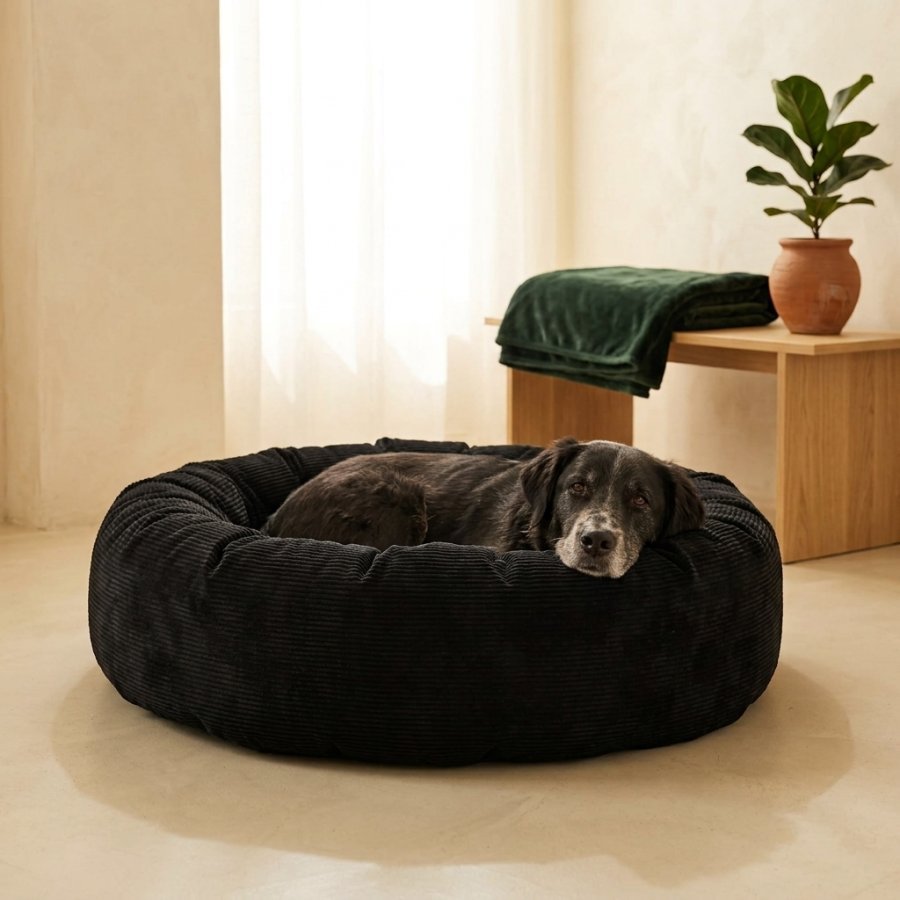 Round Comfort Bed
A soft, round bed with a raised rim for dogs who like to curl up. View
How can you tell if your dog is unsettled rather than just uncomfortable?
It is easy to assume a restless dog is anxious when they are actually in pain, or the other way round. Signs such as pacing at night, panting when not hot, shifting position repeatedly, whining, or refusing to lie down can have several causes, including discomfort, thirst, needing the toilet, cognitive changes in older dogs, or worry.
A few points that help.
- Note when it happens. Night only? After exercise? When you leave? A pattern helps your vet.
- Watch how they lie down and get up. Stiffness, hesitation, or flopping down suddenly can point to a physical problem.
- Check the basics. Temperature, thirst, toilet access and noise.
- Record a short video on your phone. It is often more useful to your vet than a description.
We cannot tell you which it is. If it is new or getting worse, book a vet visit rather than relying on a bed.
What else helps any dog settle?
A bed is only part of the picture. These changes are free and often make as much difference.
- Location. Choose a quiet corner out of draughts, close enough to the family that your dog does not feel isolated, and away from front door noise.
- Routine. A predictable evening routine, with a walk, a toilet trip and a settle-down cue, helps many dogs.
- Familiar scent. A blanket or t-shirt that smells of you can help in a new bed.
- Temperature. Make sure the spot is neither too hot nor too cold.
- Lighting and noise. A dim, quiet room often helps, and background sound such as a low radio can mask outside noises for some dogs.
- Gentle introduction. Leave the bed where your dog already rests, reward them for using it and never force them in.
If your dog is anxious in a way that affects daily life, a qualified behaviourist and your vet can help far more than any bed. Our 10 home changes for a senior dog has more everyday ideas.
How do you choose the right size?
Calming beds are sized differently from stretched-out beds. Measure your dog when they are curled up in their favourite sleeping position, then choose a bed whose inner sleeping area is a little larger than that.
If the bed is too big, a dog can feel lost in the middle and lose the sense of enclosure. If it is too small, they will hang off the edge. If your dog sometimes stretches out as well as curls up, consider the stretched length too and lean larger.
Check whether the listed dimensions are for the whole bed or for the inner space, as the rim takes up room.
It is filled with polyester, so it is a soft, cosy bed rather than a firm orthopaedic one. It comes in Small (£44.99), Medium (£54.99) and Large (£64.99).
Quick answers
Will a calming bed cure my dog's anxiety? No. A bed cannot treat anxiety. It may make resting more comfortable. For significant anxiety, speak to your vet.
Is a calming bed good for a dog with arthritis? It depends on the support. A soft, polyester-filled bed may not give an arthritic dog enough support. Look for a firm foam base with a raised rim if your dog likes a bolster.
Will a calming bed be too hot? Faux fur and thick filling can be warm. If your dog pants, moves away or sleeps on the floor in warm weather, a cooler surface may suit them better.
Should I wash a calming bed? Yes, regularly. Check the care label, and make sure it is completely dry before your dog uses it again.
Why does my dog keep circling before lying down? Circling is a common, normal behaviour in many dogs. If it is excessive, new, or comes with pacing, talk to your vet.
Print our free one-page measuring sheet for beds, harnesses, ramps and bowls.
Shop the Round Comfort Bed
A soft, round bed with a raised rim for dogs who like to curl up.
View the product — £44.99Related guides
Best Dog Bed for Arthritis in the UK: Buying Guide
How to choose a dog bed for arthritis in the UK: foam depth, size, bolster or flat, cleaning, common mistakes and when a bed is not the answer.
Keeping a Senior Dog Comfortable in Winter: Checklist
A practical winter checklist for older dogs: warm, dry bedding, safe grip on cold floors and paths, shorter walks and when to check with your vet.
How to Measure Your Dog for the Right Product Size
How to measure your dog for a bed, ramp or feeding stand, with step-by-step instructions and what to do between sizes.
Curled Up or Sprawled Out? Choosing a Dog Bed
How to choose a dog bed for a dog that sleeps curled up or sprawled out: round or flat, what size, and when a raised-rim bed is not the right fit.